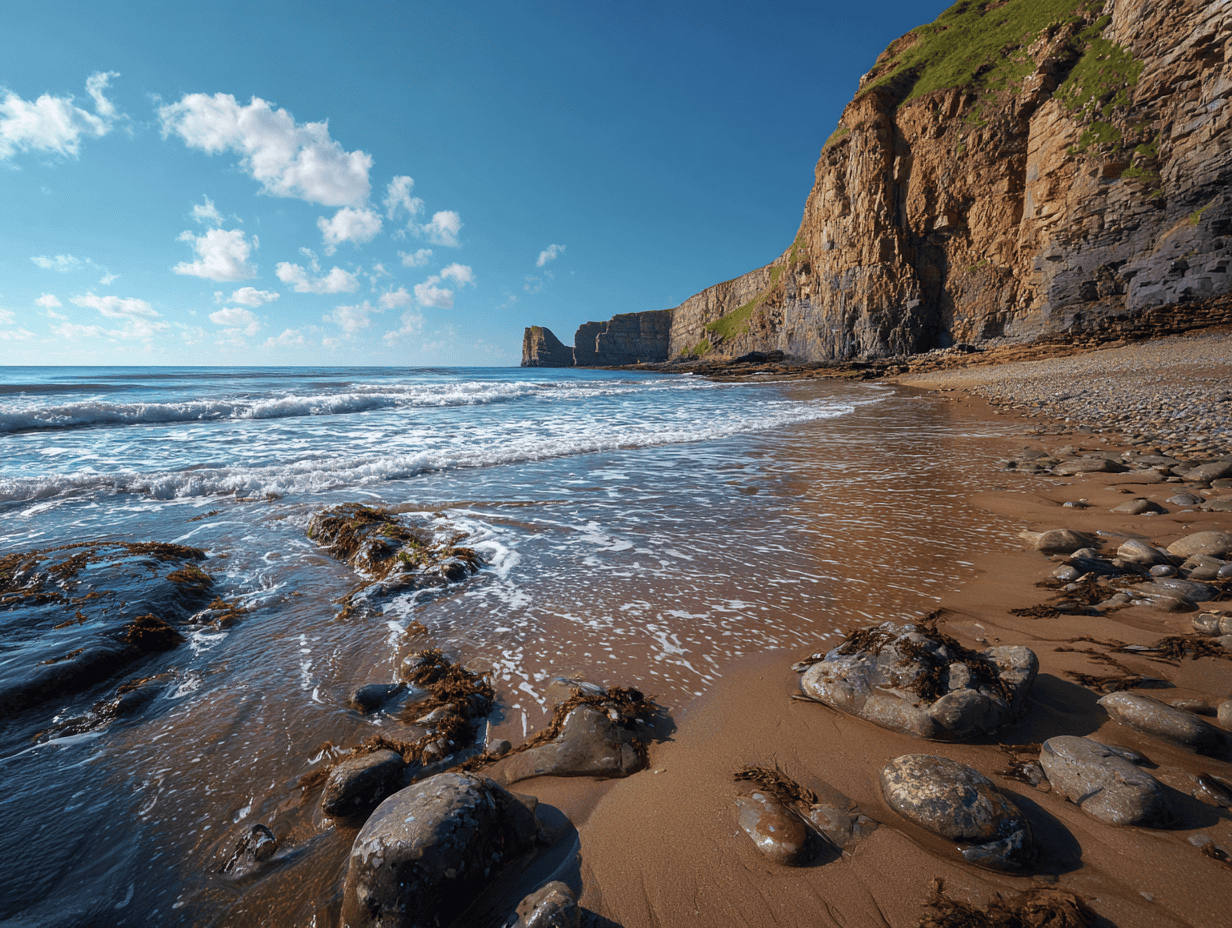
Every piece of jewellery in the Mermaid Tears shop starts the same way on a beach, in the wind, with my Jack Russell Trigger sniffing around the pebbles while I scan the tideline for that telltale frosted glint. No two pieces are ever quite the same, because no two finds ever are. That’s the whole point.
People ask us a lot where our glass comes from, how we know where to look, and whether sea glass hunting is something they could actually have a go at themselves. The honest answer is: yes, absolutely, and we’ve put everything we know into a dedicated site to help.
Sea Glass Hunting is our companion guide covering beaches right across the UK, from the Scottish coast down to Cornwall. We’ve tried to make it the kind of guide we wish had existed when we started honest ratings (we won’t tell you a beach is brilliant when it’s really just a fair afternoon out), tide guides to help you time a visit properly, and colour guides if you’re hoping to spot something a bit special, like cobalt blue or red.
If you only visit one beach, make it Seaham
If there’s one place on the whole site that deserves a special mention, it’s Seaham, in County Durham. We’re not exaggerating when we say it’s one of the best sea glass beaches in the world.
Back in the 1850s, Seaham was home to one of the largest glass bottle works in Britain. For decades, waste glass, including the gorgeous multicoloured “end of day” offcuts from artisan glassmaking, was simply dumped straight into the sea. Nearly 70 years of that, tumbled and smoothed by the North Sea, has left behind a beach that’s genuinely carpeted in sea glass.
Greens, browns and whites are everywhere, but it’s the rarer pieces that make Seaham legendary: blues, reds, even the famous “multis,” swirling end-of-day pieces that don’t really exist anywhere else in quite the same way. If you’ve ever wanted to find a piece of glass that feels like a tiny piece of history, this is the beach.
Our full Seaham guide on the site covers when to go, where exactly to look, and what to expect — plus a live tide tool so you can time your visit for the best conditions.
Every find tells a story
The thing we love most about sea glass is that every piece has already had a life before it reaches us, decades in the sea, smoothed by sand and tide, washed up by chance. When we turn a piece into jewellery, we’re not just making something pretty; we’re giving that little bit of history somewhere to go.
So if you’ve ever picked up a piece of sea glass on holiday and wondered what it was or where it came from, or if reading this has you itching to grab a coat and head to the coast yourself, have a browse of Sea Glass Hunting. And if you do find something special, we’d love to hear about it.
Every piece you find yourself is one less piece for us to turn into jewellery — but honestly, we think that’s a good thing. The sea always makes more.
Happy hunting, and if Trigger could write, he’d tell you the best finds are always near the tideline.